


The Core Role Of Solid-State Optocouplers in Industrial Control Systems
Jun 18, 2026
Leave a message
The efficient operation of industrial automation and electronic equipment depends on the precision and reliability of signal isolation and transmission. In industrial environments where high-voltage and low-voltage circuits coexist and electromagnetic interference is complex, solid-state optocouplers have become a critical component for ensuring system safety and stability, thanks to their unique optoelectronic conversion mechanism. Their non-contact signal transmission characteristics provide efficient solutions for power electronics, communication equipment, and industrial control, driving modern industrial technology toward higher safety and stronger noise immunity.
Optoelectronic Isolation Ensures System Safety
In industrial control systems, signal isolation between high-voltage and low-voltage circuits is a fundamental requirement to prevent equipment damage and operational risks. Solid-state optocouplers achieve complete electrical isolation between the input and output sides through non-contact coupling between internal light-emitting devices and photosensitive elements. This design effectively blocks common-mode voltage interference and ground-loop issues, ensuring the purity of signal transmission. In applications such as inverters and programmable logic controllers (PLCs), their high isolation withstand voltage effectively suppresses system faults caused by voltage transients, providing a foundational barrier for safe equipment operation.
High-Speed Response Optimizes Control Precision
The real-time requirements for signal transmission in industrial automation are becoming increasingly stringent. Traditional mechanical devices, constrained by the delays caused by physical contact switching, struggle to meet high-frequency demands. Solid-state optocouplers, with their all-solid-state design, eliminate mechanical movement and significantly improve response speed. In fields sensitive to timing accuracy, such as servo control and power-supply feedback, their fast switching capability ensures signal synchronization, reduces control errors caused by delays, and thereby enhances the overall dynamic performance of the system.
Noise Immunity Strengthens Environmental Adaptability
Industrial sites commonly face challenges such as electromagnetic noise, temperature fluctuations, and mechanical vibration, which can degrade the performance of traditional isolation devices. Solid-state optocouplers, with their sealed packaging and motionless construction, withstand wide temperature ranges and high-intensity vibration. Their optical coupling mechanism offers inherent immunity to magnetic-field interference, making them especially suitable for complex electromagnetic environments like welding equipment and high-frequency inverters, and providing reliable assurance for signal stability.
Compact Design Fits Integration Trends
The ongoing trend toward miniaturization and higher integration in modern electronic devices places greater demands on space utilization. Solid-state optocouplers, through advanced miniaturized packaging, significantly reduce their footprint and can be seamlessly embedded into high-density PCB layouts. This compactness not only optimizes internal space allocation but also minimizes the impact of parasitic parameters on signal quality, offering distinct advantages in space-constrained applications such as medical instruments and smart terminals.
Low Power Consumption and Long Lifespan Enhance Cost Efficiency
Based on semiconductor technology, solid-state optocouplers consume far less driving power than traditional electromagnetic devices, while also reducing heat accumulation during operation. Their low power consumption aligns with green manufacturing principles, simplifies thermal management design, and extends the service life of surrounding components. In power conversion and energy storage equipment that require long-term continuous operation, their durability significantly reduces maintenance frequency and operating costs, supporting the efficient operation and maintenance of industrial systems.
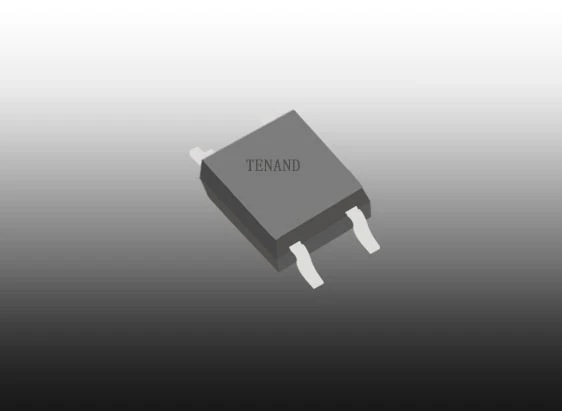
As a core isolation component in industrial control, solid-state optocouplers achieve efficient synergy between electrical isolation and signal transmission through optoelectronic conversion. Their comprehensive advantages in noise immunity, environmental adaptability, and long lifespan are reshaping the design standards and application boundaries of industrial equipment. Facing the parallel trends of intelligence and green development, solid-state optocouplers will continue to refine their technical performance, providing a more robust foundation for enhancing the reliability and energy efficiency of industrial automation systems.