


Shenzhen MATCHINGIC Technology Co Ltd: Your Professional Digital Isolators Supplier
Shenzhen MATCHINGIC Technology Co., Ltd was founded in 2010, the company always adhere to the concept of talent is the company's wealth, in the years of market honed, formed a group of enterprising, innovative staff, while expanding its market share at home and abroad, the company continues to optimize internal business processes, improve international sales and procurement business, adhere to the original goods only, deepen the level of customer service, gradually formed its own industry advantages.
Why Choose Us
Quality products
Our products are of high quality and meet all the required industry standards. We use advanced technology and modern equipment to ensure that our products are of the highest quality.
Quick turnaround time
We has a streamlined production process that ensures quick turnaround times. We can quickly produce and deliver to customers, making them an excellent choice for projects with tight deadlines.
Professional team
We has a team of highly skilled technical professionals who are always ready to assist with any technical issues that customers may have. The factory provides comprehensive technical support, including design support, product selection, and application support.
Quality services
We provide high-quality services that meet the highest industry standards. We follow best practices in our work processes and adhere to strict quality control measures to ensure that we deliver the best results to our clients.


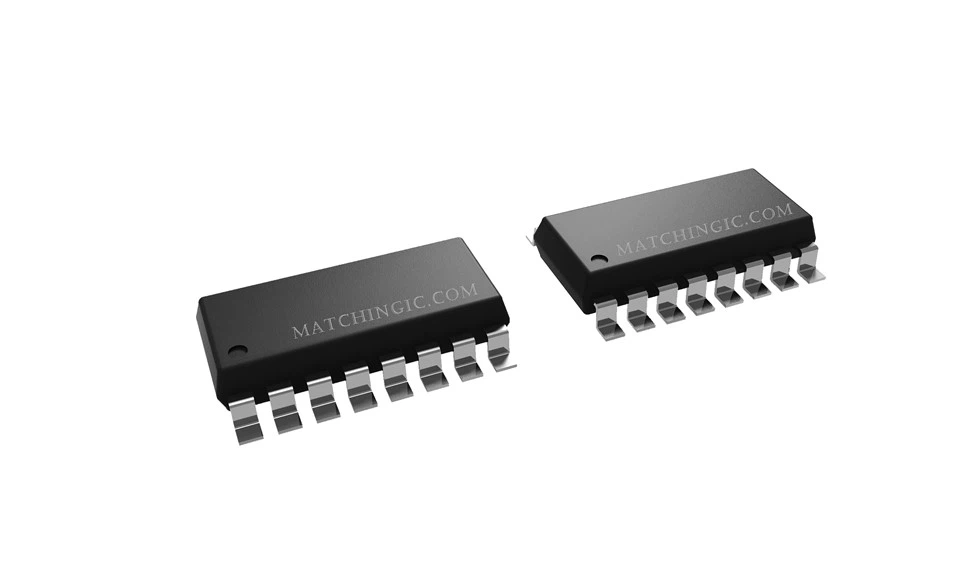
An optical isolator is an electronic device that can be used to pass information between a diode without passing an electrical current. Because there is no need to directly pass voltage or current between the inputs and outputs in an optical isolators circuit, these components can be used to provide electrical isolation in two regions in a PCB. Optical isolators act as a protection mechanism, ensuring that harmful electrical currents cannot flow across the device.

Advantages of Optical Isolators

Protection against electrical interference
Optical isolators provide complete electrical isolation between two components. This protects sensitive electronic devices from voltage spikes, electromagnetic interference, and ground loop currents.
Improved signal quality
Optical isolators help to improve signal quality by reducing the amount of noise introduced into the signal. This results in cleaner and more accurate signals.

Extended product life
By eliminating the risk of electrical interference, optical isolators help to extend the life of electronic devices. They also help to prevent damage to sensitive components by keeping them safe from voltage surges.

Safe isolation
Optical isolators provide a safe means of electrically isolating two components. This is particularly important in applications where the risk of electric shock is high, such as medical equipment.

High reliability
Optical isolators are highly reliable and durable, making them ideal for use in critical applications. They are less prone to failure and require less maintenance than other types of isolators.

Wide compatibility
Optical isolators are compatible with a wide range of electrical and electronic devices, making them a versatile isolation technology. They can be used in both ac and dc applications.
Components of an Optical Isolator

Polarizer

Faraday rotator

Analyzer
Components of an Optical Isolator
01
Polarizer
The polarizer ensures that only light with a specific orientation of the electric field (polarization) is allowed to pass through. This acts as the entry gate for the incoming light.
02
Faraday rotator
This is the central part of an optical isolator. When subjected to a magnetic field, this rotator induces a rotation in the plane of polarization of the incoming light.
03
Analyzer
This component is essentially another polarizer. However, it is oriented at an angle such that it allows light coming from the faraday rotator to pass through but blocks light coming in the reverse direction.

Types of Optical Isolators
- Optical isolators can be classified in different ways:

Fixed narrowband isolator
As their polarizers are not adjustable, the maximum isolation is only achievable at the design wavelength. The maximum isolation in a fixed narrowband isolator is around 30-35 dB.

Adjustable isolator
These isolators allow isolation to be achieved at different wavelengths by either rotating the output polarizer or by tuning the magnetic field in the faraday rotator by physically moving the magnet. Adjustable isolators also have a maximum isolation of around 30-35 dB, but can be used across wider wavelength ranges.

Fixed broadBand isolator
With these optical components it is possible to achieve larger isolation bandwidths. The maximum isolation is similar to the previous types, but for a larger wavelength range.

Tandem isolator
These isolators combine two faraday rotators. The rotators share one central polarizer and can achieve high levels of isolation up to 60 dB, but typically have lower transmission.

Free space isolator
These isolators are used in the high-speed optical transmitters or pump lasers which need to isolation from backward light. Free space isolators offer excellent performance with high isolation and low insertion loss. They can be polarization dependent or polarization independent.
Working Principle of Optical Isolators

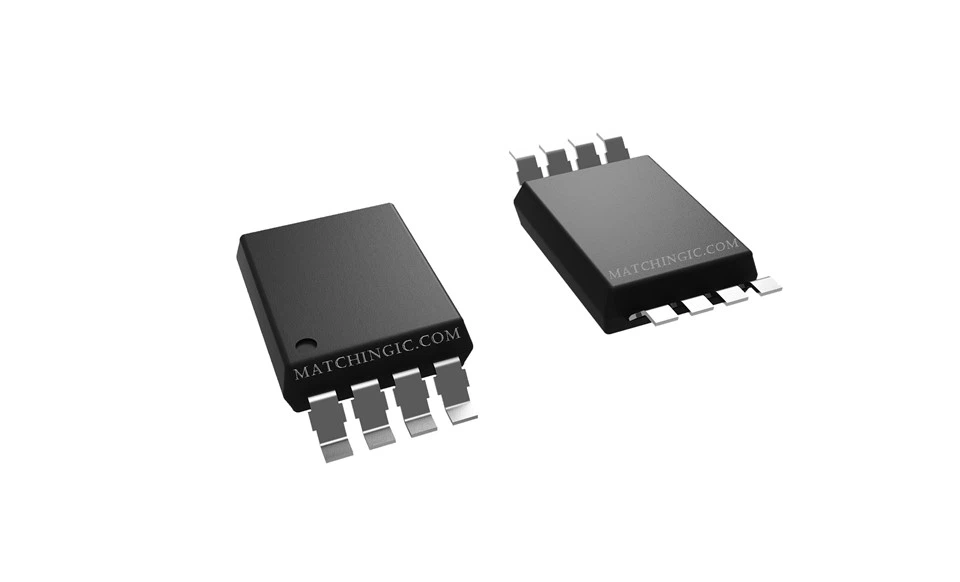
An optical isolator works by taking an input electrical signal and converting it into a light signal using a light-emitting diode, generally operating in the near-infrared spectrum. Then, within the same device, a light-sensitive device such as a photodiode, phototransistor, or photodarlington transistor converts the light signal back into an electrical signal. This provides a barrier to any voltage transients or overvoltage levels that appear at the input from affecting the electrical circuit at the output of the optoisolator. The components are sealed in an opaque package to prevent interference from external light.
There are many different types of optoisolator circuits that are widely used in communications, control, and monitoring systems where data signals could provide a point of ingress for harmful voltages to damage a device. They are particularly useful where long data cables that could be susceptible to induced voltage transients or ground plane surges enter an electronic device containing sensitive semiconductor components.

Classifications of Optical Isolators
There are two major classifications of optical isolators: Inline isolators (fiber optic isolators) and free space isolators. Inline fiber optical isolators are designed in pigtail fashion. That is to say that they come with built-in fiber optic cable and connectors so that they may be integrated directly into a fiber optic system. Free space isolators, by contrast, do not have an integral connection system. They must be directly mounted to the object that needs isolation.
Types of Optical Isolator and Their Working
An optical isolator, especially a faraday isolator, is a device which transmits light in a certain direction while eliminating the back reflection and backscattering at any polarized state. It is generally categorized into two categories – polarization sensitive optical isolators and polarization-insensitive optical isolators. As I have already mentioned them as faraday isolators, it is obvious that they use the faraday effect of the magneto-optical crystal.

Types of Optical Isolator and Their Working


An optical isolator, especially a faraday isolator, is a device which transmits light in a certain direction while eliminating the back reflection and backscattering at any polarized state. It is generally categorized into two categories – polarization sensitive optical isolators and polarization-insensitive optical isolators. As I have already mentioned them as faraday isolators, it is obvious that they use the faraday effect of the magneto-optical crystal.
Polarization sensitive optical isolators:
These are the simplest faraday isolators which work only when the input beam has a guided linear polarization.
Working:
Their working is simple in which a polarized beam is passed through the first polarizer with minimum loss, then pass through 45 degree faraday rotator and finally passed through the second polarizer with its transmitting axis being rotated by 45 degree in order to ensure that transmission losses are as low as possible.
When this light is reflected back to the output port with unmodified polarization state, it will fully pass through the output polarizer, but due to 45 degree rotated direction of polarization, the light will be blocked at the input polarizer or can be sent to separate output port. In case if the rotator's rotation angle deviates from 45 degree due to any reason such as fabrication errors, the degree of isolation would be reduced. The problem is that we always need an isolator with high isolation which may be reduced in these kinds of isolators due to several reasons.
Polarization insensitive optical isolators:
A polarization insensitive optical isolator is the device which functions for arbitrary polarization of the input beam. As many fibers don't maintain the polarization, such devices are often suitable and required in the context of fiber optics. Moreover, optical fiber communication systems are operated with arbitrary polarization state, so you need to use the faraday isolators and other components which can cope with undefined polarization state.
Principle:
The basic principle of PI optical isolator is to spatially separate the orthogonal polarization components of I/P beam with the help of a polarizer. Then, send them through faraday rotator and combine the components again in the second polarizer.
The thing to note here is that polarization insensitive optical isolator doesn't preserve the polarization state as there is an undefined relative phase change between the two components of polarization. This phase change is dependent on temperature and wavelength.
These isolators are widely used in telecommunication industry and various other applications in laser technology. They are characterized by high isolation, low insertion loss and excellent temperature stability. In the market, these isolators are available in various wavelengths and bandwidths.
、
Important Specifications When Choosing Optical Isolators
The isolation voltage is the maximum rated voltage difference that can be present between the LED and the light sensor. This isolation voltage is governed by the construction of the optoisolator device itself and factors outside the device. An internal breakdown will occur when the voltage at the light source element of the device arcs across to the light sensor element. Similarly, an external breakdown will occur when the voltage at the input pin of the device arcs across to an output pin. This is affected by the PCB design, which is how the traces for the inputs and outputs are routed and separated and the environmental conditions around the device. The voltage at which arcing will occur will depend on the temperature, humidity, separation distance, pressure, and airborne contaminants' presence. Distance and humidity are the most significant factors.
Where an optoisolator circuit is used to decouple ground planes or voltage sensing inputs, the rate of change of the isolated signal is relatively unimportant. However, where the optoisolator is used to decouple data links and communications lines, the device's throughput becomes essential. Bear in mind that the achievable data rate for any optoisolator circuit will depend on how the output is loaded and affected by temperature. Study the datasheet very carefully if you're isolating fast data links.
It is worth mentioning that off-the-shelf passive network isolators are available for wired ethernet networks that use electromagnetic induction to provide an electrically non-conducting barrier without the requirement for an external power supply. Implementing an optoisolator circuit may not always be the most appropriate solution, but that decision will depend on your individual circumstances.
As with any semiconductor device, the photodiode used in the optoisolator will have an element of non-linearity in the relationship between the input and output, which can distort the signal being passed through the isolator. Ensuring the photodiode is biased and operated in its linear range, avoiding the cutoff or saturation regions, will reduce this effect to some extent. Any residual non-linearity will be particularly noticeable where the optoisolators are used to decouple analog signals.
Specialist analog optoisolators have been developed with minimal non-linearity. Typically, they use two photodiodes connected to an operational amplifier. One photodiode operates as usual, while the second device with identical non-linearity performance sits in the amplifier's feedback loop to compensate by canceling out the non-linearities.
The current transfer ratio (CTR) is the ratio between the LED and sensor currents, effectively gaining the device and reflecting its efficiency. Opto-isolators with a low CTR will require more current to drive the LED to create sufficient current at the phototransistor for a particular output load.
The CTR is not constant but is dependent on the input current coming into the component. The CTR will also vary with each component, its temperature, and the component's age, so it's crucial to select a device that delivers the required CTR at the maximum rated temperature and maximum operating life of the device the optoisolator will be using. Manufacturing tolerances in components can lead to wide ranges of CTR within the same batch of components, so the design must work based on the minimum CTR stated in the data sheet. All these factors can make the selection of the optimum device tricky.
Power
The final factor to bear in mind is the power requirements of the optoisolator circuit itself and the management of heat generated by the component due to losses. Basic components can be relatively inefficient and generate significant thermal energy levels that must be appropriately handled, particularly as the performance of the optoisolator itself will be adversely affected by heating effects. When designing the circuit layout, remember to keep the input traces to the optoisolator circuit suitably separated from all other traces, especially ground and power planes, to prevent transients from being capacitively or inductively coupled between traces.
Instructions for Building an Optical Isolator
Instructions for Building an Optical Isolator
1. Mount the polarizing cube beamsplitter into the c-mount cube.
2. Connect the C-Mount double male rotating barrel to the c-mount cube at the beamsplitter's transmitted port side.
3. Mount the waveplate into the C-Mount thick lens mount.
4. Attach the mounted waveplate to the C-Mount double male rotating barrel. Orient the waveplate at 45° to the transmission axis of the polarizing cube beamsplitter.
5. Finalize alignment by inputting a laser beam and lock the angle position of the C-Mount double male rotating barrel once maximum beam isolation is achieved.
Specifications of Optical Isolators
Important specifications for optical isolators include center wavelength, isolation, insertion loss, and polarization dependant loss. Center wavelength is the center of the wavelength range in which the isolator is designed to function optimally. This characteristic is usually measured in nm. Isolation, generally measure in decibels (db), is a measure of how effectively back reflections are prevented and the degree to which the isolator can transmit. Insertion loss is the attenuation caused by the insertion of an optical component. Polarization dependant loss is the attenuation caused by polarization.
Applications of Optical Isolators
Due to their unique capabilities, optical isolators find a wide range of applications in today's highly advanced optical systems. Some of the most prevalent applications include:
Laser systems: High-powered laser systems often use optical isolators to prevent damaging feedback to the laser source. The optical isolator allows the output light to proceed to the target but blocks any reflected light from reaching the laser source.
Fiber-optic communications: In fiber-optic networks, optical isolators protect sensitive receivers from signals that could be reflected back along the fiber. They are also used in optical amplifiers to prevent unwanted feedback and oscillations.
Optical sensors: In optical sensors, isolators are used to eliminate the effects of back reflections or scattering from the measured object, which could interfere with the measurement.
Future of Optical Isolators
As optical technology continues to advance, the demand for optical isolators is projected to increase. Particularly in fields like quantum computing and nanophotonics, where the control of light is of utmost importance, the role of optical isolators will likely be further accentuated. Moreover, with continued research and development in materials science, more efficient and miniaturized optical isolators may be realized, paving the way for more advanced, high-speed, and integrated optical systems.
FAQ
We're professional optical isolators manufacturers and suppliers in China, specialized in providing high quality products with low price. If you're going to buy cheap optical isolators in stock, welcome to get pricelist and free sample from our factory.