


The Technological Evolution Of Optocouplers in The Power Supply And Communications Industries
Jun 13, 2026
Leave a message
The growing complexity of modern power electronics and communication systems imposes ever-higher demands on the reliability of signal isolation and transmission. With their unique photoelectric conversion mechanism, optocouplers have established an irreplaceable technological position in critical areas such as power modules and communication equipment. Through contactless signal isolation and noise immunity, these devices are redefining system safety standards in high-noise environments, driving the continuous evolution of both industries toward greater integration and stronger environmental adaptability.

Electrical Isolation Reinvents Power Supply Safety Architectures
The coexistence of high-voltage and low-voltage circuits in power systems demands complete electrical isolation during energy conversion. Optocouplers create an insulation barrier between input and output by transmitting light between an internal light-emitting diode and a photodetector. This design blocks common-mode voltage conduction paths, preventing abrupt voltage changes at the power stage from impacting the control circuit. In applications such as switching power supplies and inverters, their isolation characteristics effectively eliminate the risk of equipment damage caused by ground loops, providing a fundamental safeguard for safe system operation.
As renewable energy generation and energy storage equipment proliferate, power topologies are becoming increasingly complex. By optimizing insulation materials and packaging processes, optocouplers continuously improve voltage withstand levels and surge immunity, meeting the stringent requirements that extra-high-voltage equipment places on isolation components, and propelling power electronic systems toward higher power density.
Signal Integrity Preserves Communication Transmission Quality
In complex environments plagued by electromagnetic interference and signal crosstalk, communication equipment must ensure the accuracy and stability of data transmission. Optocouplers leverage the inherent noise immunity of optical signal transmission to eliminate the contamination of digital signals by cable-coupled noise and radio frequency interference. In industrial Ethernet, fiber-optic communication interfaces, and similar scenarios, their common-mode rejection capability preserves signal waveform integrity, reducing bit error rates and the likelihood of data retransmission.
Faced with the explosive growth of 5G base stations and IoT devices, communication systems are imposing new demands on the response speed of isolation devices. By improving carrier mobility efficiency and the response bandwidth of photosensitive materials, optocouplers significantly reduce signal transmission delay, adapting to the technical requirements of high-speed SerDes interfaces and real-time control buses, and providing the hardware foundation for building low-latency communication networks.
Environmental Adaptability Expands the Boundaries of Industrial Applications
Power supplies and communication equipment are often deployed in harsh environments characterized by high temperatures and vibration, where traditional isolation solutions are prone to performance degradation under environmental stress. Optocouplers employ an all-solid-state structure and ceramic packaging technology, enabling them to withstand extreme temperature cycles and mechanical shock. In outdoor communication base stations, automotive power systems, and other applications, their hermetically sealed package design effectively resists moisture and dust ingress, ensuring parameter stability over a service life of more than a decade.
As Industry 4.0 advances, intelligent devices are spawning more edge computing nodes. Through miniaturized packaging and surface-mount technology, optocouplers achieve a tightly coupled layout with control chips such as FPGAs and MCUs. This spatial optimization not only reduces parasitic capacitance along the signal transmission path, but also creates the hardware conditions for developing distributed power modules and miniature communication terminals.
Energy Efficiency Optimization Drives the Shift to Green Technology
Improving the energy efficiency of power systems and controlling the power consumption of communication equipment have become key indicators of sustainable industry development. Owing to their semiconductor-based driving characteristics, optocouplers consume two orders of magnitude less energy than electromagnetic relays, while also avoiding the problem of contact resistance degradation caused by contact oxidation. In data center power architectures and base station power supply systems, this low-power characteristic reduces the system's heat dissipation requirements and lowers the share of energy consumed by cooling systems.
In line with global carbon neutrality goals, new energy equipment and energy-efficient communication networks are being deployed at an accelerated pace. Optocouplers further reduce their own operating energy consumption by improving the quantum efficiency of light-emitting devices and minimizing photoelectric conversion losses. These technical improvements create synergistic effects with high-efficiency solutions such as LLC resonant topologies and GaN power devices, collectively building the technological cornerstone for green energy infrastructure.
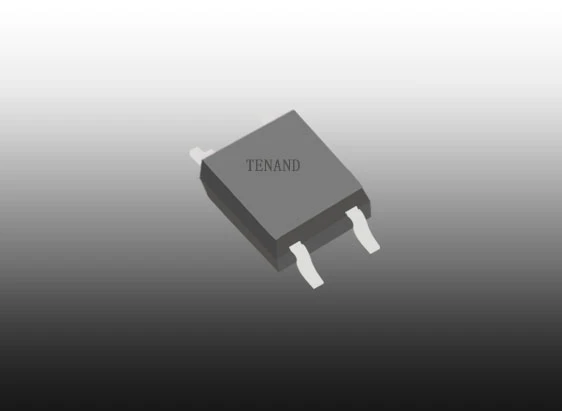
These technological breakthroughs are reshaping the development paradigm of power supplies and communication equipment. In the dynamic voltage regulation systems of smart grids, adaptive optocouplers can optimize isolation parameters in real time. In the RF front-ends of 6G terahertz communications, their immunity to electromagnetic interference provides a clean reference for high-frequency signal processing.
As a cross-disciplinary nexus between power electronics and communication technology, optocouplers are continuously pushing the performance limits of isolation devices through ongoing technological evolution. Their comprehensive strengths in electrical safety, signal fidelity, and environmental resilience have become key enabling factors for power architecture innovation and communication network upgrades. In the face of the deep convergence of the energy revolution and the information revolution, optocouplers will continue to deepen innovations in materials, structures, and functionality, injecting ever-stronger foundational support into the technological leap of both industries.