


High-Voltage Isolators: Technological Evolution And Industry Enablement
Jul 04, 2026
Leave a message
The safety architecture and efficiency upgrades of power electronic systems have always depended on reliable isolation between high-voltage and low-voltage circuits. As core mediums for energy transfer and signal control, high-voltage isolators provide a fundamental safety barrier for new energy equipment and industrial drive systems through continuously evolving insulation technologies and structural innovations. Their ability to block the conduction of potential differences and suppress electromagnetic interference is reshaping the standards for equipment protection in complex power environments.

Electrical Isolation Reinvents the Safety of Energy Transmission
High-voltage isolators create a physical barrier that blocks potential differences through optical coupling, magnetic induction, or capacitive coupling mechanisms. In applications such as variable frequency drives and photovoltaic inverters, their insulating medium withstands voltage differences of several thousand volts, effectively preventing surges from power modules from impacting control circuits. With the widespread adoption of third-generation semiconductors, these devices optimize dielectric withstand characteristics and creepage distance designs to match the high-frequency switching behavior of silicon carbide (SiC) and gallium nitride (GaN) power components, providing dynamically adaptive isolation for high-efficiency energy conversion systems.
Multi-Layer Protection Mechanisms Strengthen System Robustness
Failures in industrial equipment often originate from chain reactions caused by cross-interference between high-voltage and low-voltage circuits. High-voltage isolators integrate a basic isolation layer, an electromagnetic shielding structure, and a fail-safe mode to form a three-tier protection system: the basic layer blocks DC conduction paths, the shielding layer suppresses high-frequency interference coupling, and the fail-safe mode ensures a physically disconnected state under fault conditions. This design confines single-point failures in electric vehicle drive systems and energy storage converters to a local scope, preventing system-level paralysis, and has become a core technological element for achieving functional safety certification.
Extreme Environment Tolerance Expands Application Boundaries
Facing challenges such as drastic temperature changes, mechanical vibration, and chemical corrosion, high-voltage isolators achieve stable operation over a wide temperature range from -40°C to +150°C and resist high-intensity shock and corrosive media through three key innovations: thermal management with ceramic substrates, lead-free welding processes, and nano-scale sealing coatings. These characteristics enable them to support maintenance-free operation cycles of more than ten years in harsh scenarios such as offshore wind turbine pitch control systems and mining explosion-proof equipment, significantly reducing the operation and maintenance costs and the risk of downtime for equipment in remote locations.
Integrated Design Responds to the Trend of System Miniaturization
The demand for high-density integration in power electronic equipment is driving innovations in isolation technology. High-voltage isolators employ planar transformers to compress the thickness of magnetic circuits to 30% of traditional designs, integrate isolated power supplies and signal channels through multi-chip packaging, and adopt an innovative embedded layout that closely matches the heat dissipation substrates of power semiconductors. This integration approach reduces wiring length by 30% for space-constrained scenarios such as server power supplies and on-board chargers, lowers parasitic parameter interference, and simultaneously optimizes thermal management efficiency.
Technological Synergy Drives Future Evolution
The technological advancement of high-voltage isolators is deeply intertwined with the development of power electronics: polyimide-boron nitride composite dielectrics increase insulation strength per unit thickness; online insulation monitoring functions enable early warning of incipient failures; and drive solutions matching the 200 V/ns switching slew rate of SiC devices push response limits. In emerging fields such as dynamic tuning in smart grids and corrosion-resistant isolation for hydrogen electrolyzers, these devices continue to provide customized solutions for ever-higher voltage platforms and complex electromagnetic environments.
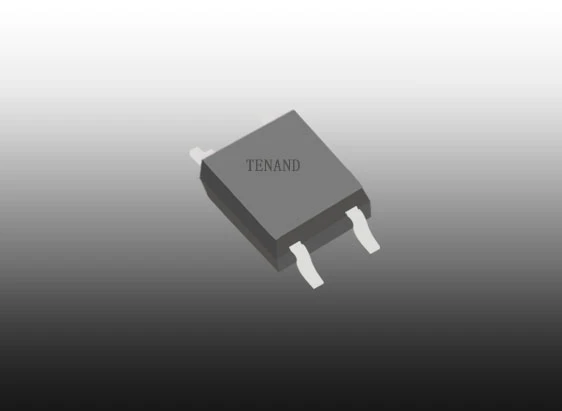
From a basic safety barrier to a system-level enabling core, the technological evolution of high-voltage isolators has always been anchored to the forefront demands of power electronics. The continuous breakthroughs in their electrical isolation strength, extreme environment tolerance, and high-density integration capabilities are building an irreplaceable technological cornerstone for the new energy revolution and the global electrification process. Facing the technical challenges of emerging fields such as extra-high-voltage equipment, intelligent systems, and space power supplies, the next generation of isolators, through the deep integration of wide-bandgap semiconductor materials, self-diagnostic intelligent algorithms, and heterogeneous integration technologies, will propel power electronic architectures toward ever-higher safety levels, stronger environmental adaptability, and superior spatial efficiency, ultimately becoming the critical infrastructure for the era of the Energy Internet.