


The Past And Present Of Optocouplers: Evolution From Inception To Modern Applications
Dec 19, 2025
Leave a message
The optocoupler is a vital electronic component whose role in signal isolation and transmission is irreplaceable. Since its initial development in the 1960s, the optocoupler has evolved from a basic isolation device into a high-performance component, securing a significant place in modern electronic equipment. This article delves into the development history, technical characteristics, and extensive applications of optocouplers in today's technological landscape.
1. The Birth of the Optocoupler
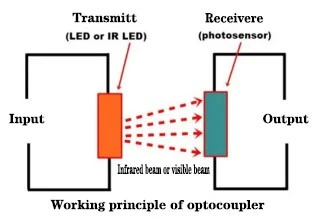
The optocoupler originated in the 1960s, born from the need to solve isolation problems during signal transmission between different circuits. Scientists designed this novel device based on optical signal transfer. An optocoupler converts an electrical signal into an optical signal using a light-emitting diode (LED), which is then received by a photosensitive device and converted back into an electrical signal. This design achieves complete electrical isolation between input and output, thereby enhancing signal transmission safety and effectively preventing inter-circuit interference and high-voltage damage.
2. Technological Evolution of Optocouplers
Optocouplers have continuously evolved with technological advancements. Early versions only met simple signal isolation needs, but their performance has significantly improved as application scenarios expanded.
The response speed of optocouplers has progressed from milliseconds in the first generation to nanoseconds today, enabling them to meet the demands of modern high-speed communication and complex circuits. Furthermore, the noise immunity of optocouplers has substantially improved, allowing their widespread use in industrial automation and high-frequency equipment. Concurrently, the package form and size of optocouplers have gradually miniaturized, aligning with modern electronic devices' requirements for compact, thin designs.

3. Modern Applications of Optocouplers
Today, optocouplers are widely used across multiple technological fields, particularly in scenarios requiring high-voltage isolation and signal protection, where their role is indispensable.
In industrial automation equipment, they are used for control signal isolation, ensuring operational safety and stability.
In power management systems, optocouplers enable high-precision signal transmission and isolation, enhancing circuit reliability.
In modern communication technology, they are employed for isolating and protecting high-frequency signals to prevent interference and distortion.
With the rise of new energy vehicles, optocouplers are applied in battery management systems and high-voltage control modules to ensure efficient and safe circuit operation.
4. Future Development Trends
The future development of optocouplers will primarily focus on higher efficiency, greater stability, and enhanced intelligence. As 5G communication, the Internet of Things (IoT), and artificial intelligence technologies become widespread, the importance of optocouplers in high-speed data transmission and multi-functional integration becomes increasingly prominent.
Future optocouplers will emphasize miniaturization and higher integration to meet the demands of micro-devices. Simultaneously, with breakthroughs in semiconductor technology, the response speed and transmission efficiency of optocouplers will further improve to satisfy the needs of high-speed communication equipment. Additionally, in response to the global trend of green environmental protection, the manufacturing materials and processes for optocouplers are also evolving toward low power consumption and recyclability.
5. Conclusion
From its initial simple isolation function to its current status as a high-performance signal transmission device, the optocoupler serves as a microcosm of electronic technology development. Its continuous evolution has not only met diverse application needs but has also driven rapid progress in industrial automation, communication technology, and the new energy sector. In the future, as technology advances, the optocoupler will play an indispensable role in more fields, providing a solid foundation for innovation in modern electronic technology.