


Silent Revolution: The Industrial Symphony Of Digital Isolators And Solid-State Relays
Apr 22, 2026
Leave a message
In factories resembling steel forests, a silent transformation is unfolding. Robotic arms on the assembly line are no longer intimidated by spark-showering relays, and circuit boards in control rooms no longer "tremble" at voltage surges. The protagonists of this revolution are two seemingly ordinary electronic components: the digital isolator, akin to a negotiation expert versed in "circuit diplomacy," and the solid-state relay, resembling an agile swordsman wielding a "blade of light." Together, they compose a symphony of automation that is redefining the operational laws of modern industry.
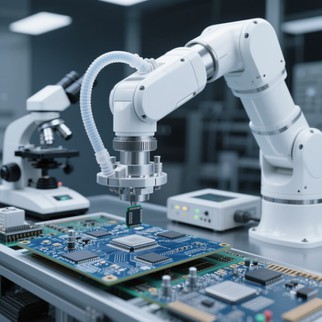
1. The "Electronic Diplomats" in Hazardous Zones
An industrial site is like a war zone of interwoven voltages-380V power cables roar like dragons, while 24V sensor signals flutter like fragile butterflies. Digital isolators erect a transparent "diplomatic corridor" between these two extremes, transmitting messages in the "secret language" of light or magnetism. When the heating rod of an injection molding machine needs to report its temperature to the control chip, the digital isolator converts the high-voltage signal into pulses of light, which traverse the isolation barrier and are reassembled into digital language-a process akin to transmitting classified documents via Morse code.
Inside the control cabinet of a variable frequency drive, these "electronic diplomats" demonstrate even more astonishing skills. They handle over a dozen signal isolation tasks simultaneously, allowing data streams-motor speed commands, fault feedback, temperature monitoring-to shuttle freely between high- and low-voltage worlds without mutual interference. While traditional optocouplers must "queue" to process communications, digital isolators coordinate multiple channels simultaneously, like a symphony conductor.
The "contactless diplomacy" of solid-state relays is even more remarkable. When required to interrupt a 50A current, they do not spark like mechanical relays. Instead, they elegantly close the internal semiconductor channel, as if replacing a guillotine knife with a curtain of light. This characteristic spares hazardous areas in chemical plants from the deflagration risks associated with switching actions-as if fitting the equipment with an explosion-proof mask.
2. The "Speed-of-Light Dancers" on the Assembly Line
The actuation speed of a traditional relay resembles that of an elderly person with a cane, whereas the solid-state relay is a millisecond-level "lightning dancer." On a packaging machine's sorting line, when a photoelectric sensor detects a misaligned product, the solid-state relay can cut power to the conveyor belt in a thousandth of a second. Its reaction speed rivals the precision of a frog's tongue catching a fly.
Even more exquisite is their application in welding robots. The digital isolator and solid-state relay form a "hyper-speed reflex arc": The instant the vision system detects a deviation in the weld seam, the isolator transmits the signal losslessly, and the relay immediately adjusts the welding torch power. The speed of this combination enables welding precision at the hair's breadth level, as if equipping the mechanical hand with a neural conduction system.
On food filling lines, this duo exhibits a unique tenderness. Solid-state relays employ "soft-start" technology, allowing motors to be gently nudged forward by an invisible hand to prevent violent sloshing of liquids. Meanwhile, digital isolators monitor microampere-level signals from flow sensors in real time, ensuring that the volume error per bottle remains within three drops. This blend of firmness and gentleness mirrors the precision of a master tea sommelier pouring tea.
3. The "Invisible Stewards" of the Smart Factory
Digital isolators are weaving the "neural network" of the Industrial Internet of Things (IIoT). In digitalized workshops, they convert equipment status signals from 200 meters away into interference-resistant digital pulses and send them back to the central control room. This process is like fitting each sensor with noise-canceling headphones, ensuring that even "whispers" in a noisy factory are transmitted clearly.
Solid-state relays transform into "smart switches" for energy management. When the production line enters a lunch break, they automatically cut power to non-essential equipment and quietly reawaken the system just before work resumes. This "breathing-style" energy-saving mode slashes standby energy consumption of the entire plant by nearly half, as if installing an electronic biological clock in the workshop.
In predictive maintenance systems, this pair demonstrates prophetic insight. Digital isolators continuously "listen" to the vibration frequency of motor bearings, while solid-state relays log their switching cycle lifespan. When a relay becomes "fatigued," the system automatically orders a replacement component and schedules the changeover window, much like equipping machinery with a private health butler.
4. The "Super-Duo" of Future Manufacturing
In cold chain warehouses at -50°C, the solid-state relay's "cold-resistant constitution" is astonishing. Free from the sticking and jamming issues caused by frost on mechanical contacts, they nimbly switch refrigeration units even in extreme cold, as if cloaking the equipment in polar bear fur. The wide temperature tolerance of digital isolators ensures that signals from temperature sensors remain accurate while traversing extremes of heat and frost.
In the vision of space factories, this duo holds even greater strategic value. In zero-gravity environments, the radiation-hardened design of digital isolators secures signal transmission, while the contactless nature of solid-state relays prevents short circuits caused by space dust. They are like bespoke "space electronic suits" designed for interstellar manufacturing.
Even more exciting is their evolution in the trend toward miniaturization-a postage stamp-sized digital isolator chip can handle 20 isolated signals, and a fingernail-sized solid-state relay can control 10kW of equipment. This feat of "bone-shrinking" skill allows industrial controllers to hide within smart screwdrivers and micro grippers, heralding a revolution of "invisible automation."
From the flying sparks of automotive welding workshops to the cleanrooms of pharmaceutical plants, from the vibrating environments of mining machinery to the salt spray onslaught on offshore platforms, the "silent partners"-digital isolators and solid-state relays-are reshaping the DNA of industrial automation. They produce no sparks and generate no electromagnetic noise, yet with their photoelectric magic they make equipment smarter, production lines more flexible, and factories safer. When the only sound in a factory late at night is the gentle hum of operating equipment, that is the stirring melody of the new industrial symphony. In this composition, every note is a safety signal transmitted by an isolator, and every beat is the precise arc traced by a relay.