


Digital Isolators Vs. Traditional Isolation Technology: Who Is The New Favorite For Circuit Safety?
Jan 30, 2026
Leave a message
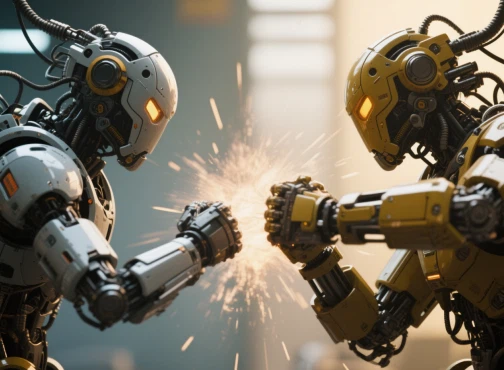
Inside electronic devices, circuits operating at different voltages are like neighbors living in the same building but having no interaction with each other. To enable them to "communicate" safely, isolation technology is needed to help. Today, the competition between digital isolators and traditional isolation technology is intensifying. Who truly has the upper hand? Let's explore this through the following aspects.
1. Working Principles: Drastically Different "Communication Methods"
Traditional Isolation Technology: Among traditional methods, the optocoupler is the most familiar. It's like using a "flashlight" and a "light-sensitive eye" to pass messages-an LED emits light, and a phototransistor receives the optical signal to achieve isolation between circuits. However, this method has a major issue. Just as a flashlight's beam weakens over time, the LED degrades slowly, leading to increasingly unstable signal transmission. Furthermore, the speed of optical signal transmission is relatively slow. When urgent "messages" need to be sent, it's easy to cause delays.
Digital Isolators: Digital isolators employ more advanced semiconductor technologies, such as magnetic coupling and capacitive coupling. Magnetic coupling is akin to passing information with "tiny magnets," transforming signals into magnetic field pulses via chip-scale transformers that can pass quickly even through an insulating barrier. Capacitive coupling is like modulating signals with "tiny capacitors," using high-frequency signals to rapidly "call out." These methods break free from the limitations of optical signals, making signal transmission both fast and stable.
2. Performance Showdown: A Clear "Battle of Capabilities"
Speed: The signal transmission speed of traditional optocouplers is like riding a bicycle, capable of transferring at most 1 million bits of data per second. In scenarios requiring rapid response, such as an autonomous vehicle receiving sensor signals, it simply can't keep up. In contrast, digital isolators are like taking a high-speed train, achieving transmission speeds up to 150 million bits per second, with reaction times as fast as 32 nanoseconds, easily handling various emergency situations.
3. Power Consumption
Traditional optocouplers require their LEDs to be constantly "on" to transmit messages, consuming significant power. The power consumption per channel is equivalent to illuminating 50 small LED beads simultaneously. In systems like industrial automation requiring numerous channels, it's like having a bunch of light bulbs on-not only power-hungry but also prone to generating heat. Digital isolators are much smarter, "working" only when signals change. Their average power consumption is reduced by about 90% compared to traditional optocouplers, making them particularly suitable for products sensitive to battery life, such as electric vehicles and wearable devices.
4. Durability
The LED in a traditional optocoupler ages over time, much like a light bulb that eventually fails, with an average lifespan of only about 10 years-even shorter in frequently used scenarios. Digital isolators have no easily worn-out components. They are like "solid blocks of iron," boasting a Mean Time Between Failures (MTBF) exceeding 1 million hours and can operate stably even in extreme temperature environments, making them far more reliable than traditional optocouplers.
5. Application Scenarios: Each Showing Its Strengths
Traditional Isolation Technology: Due to slower speed and higher power consumption, traditional optocouplers are now primarily used in simple circuits with lower requirements, such as older, low-power appliances where demands for signal transmission speed and stability are not as high.
Digital Isolators:
Electric Vehicles: In the Battery Management System (BMS) of an electric vehicle, digital isolators can isolate signals between the 400V high-voltage battery and the 12V low-voltage control system. This ensures accurate transmission of battery information while preventing high voltage from "wandering" and causing hazards.
Industrial Automation: The servo control systems of industrial robots need to handle multiple high-speed signal paths simultaneously. Digital isolators can integrate 4 channels within a tiny chip, saving up to half the circuit board space and allowing the robot to react more swiftly.
Medical Devices: In hospitals, digital isolators play a significant role. They produce no mechanical noise, making them suitable for ventilators. In strong magnetic field environments like MRI equipment, their noise immunity can be 10 times that of traditional optocouplers, ensuring medical imaging data is accurate and reliable.
6. Future Development: The "Infinite Potential" of Digital Isolators
While the current price of digital isolators is somewhat higher than traditional isolation technology, their advantages will become increasingly pronounced as technology develops. In the future, digital isolators will become smarter, capable of self-monitoring their status to enable remote control and predictive maintenance. In terms of manufacturing, the use of new materials will further enhance their performance while reducing their size. Moreover, domestic (Chinese) digital isolators are developing rapidly, which will make prices more affordable and applications more widespread in the future.From working principles and performance to application scenarios, digital isolators demonstrate stronger capabilities than traditional isolation technology. Although minor challenges remain, with continuous technological advancements, digital isolators are likely to become the "leading role" in the future of circuit safety, safeguarding more and more electronic devices in our lives.